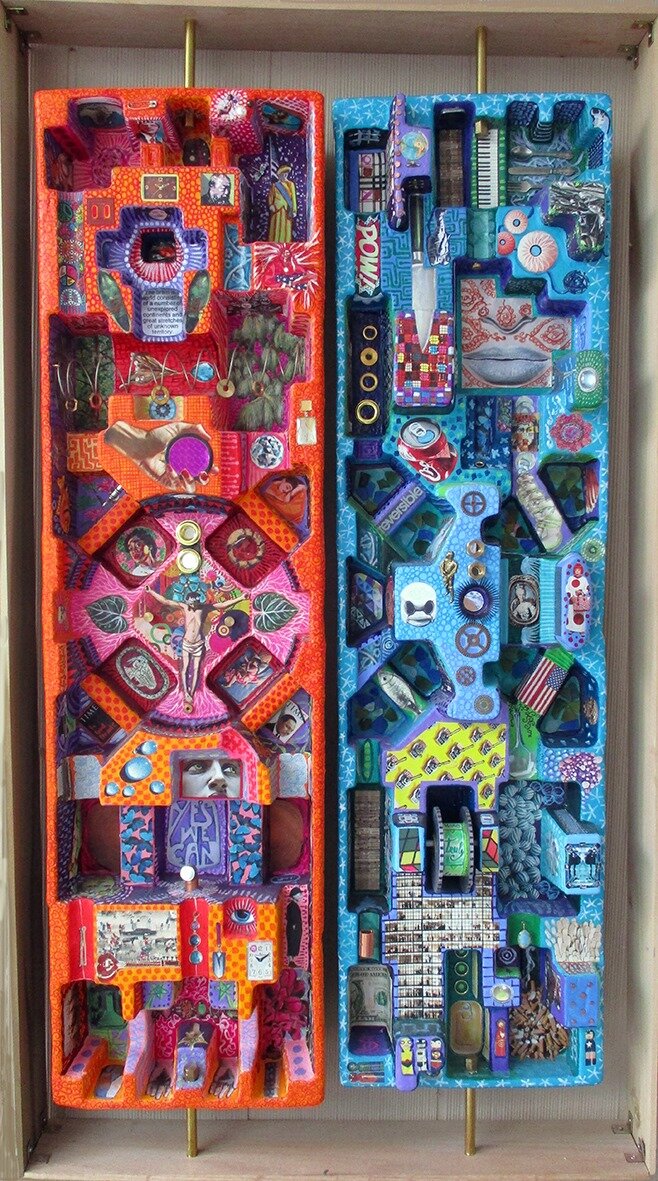
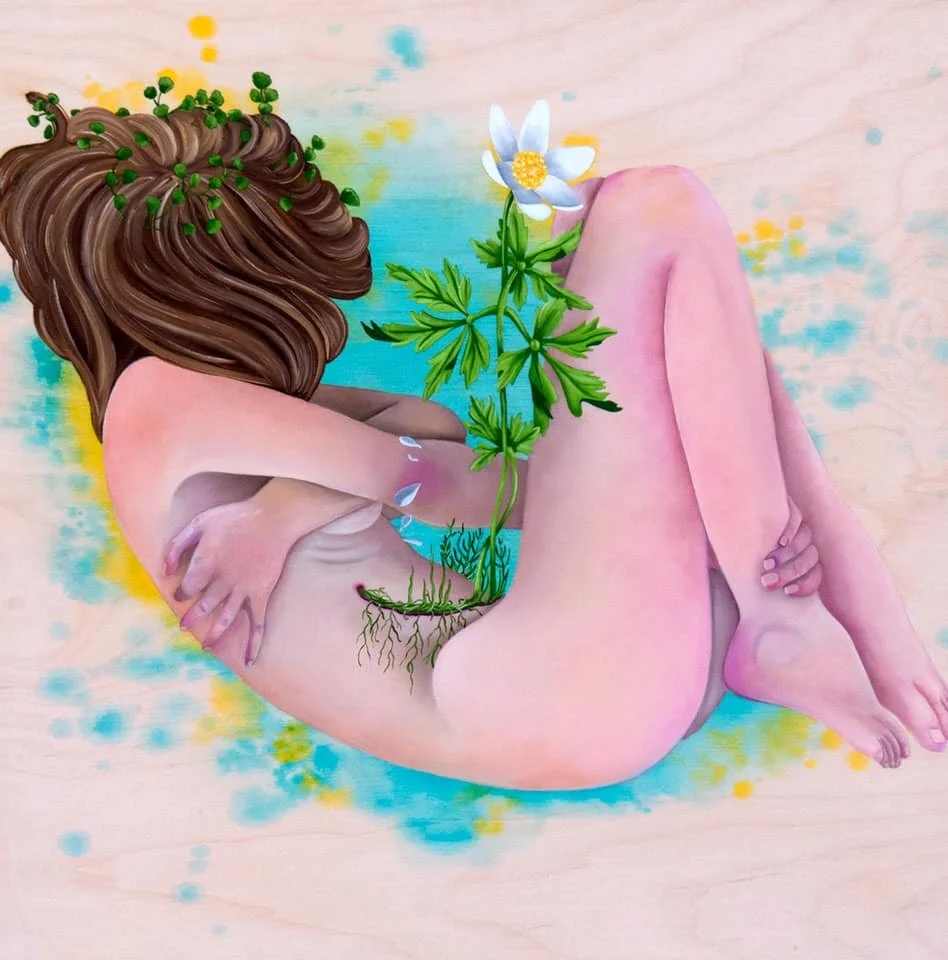
An Interview with Heather Weller

To kick off the fall season at the Walter Art Gallery, Heather Weller will be returning with a solo collection showcasing her creativity across mediums. Get to know the inspiration behind the show, Fable.
Heather Weller was born and raised in Phoenix, Arizona. She graduated from Arizona State University in 2021 with a Bachelor of Fine Arts and currently pursues higher education through the Master of Fine Arts program at ASU. During her career, Weller has had the pleasure of apprenticing for painter Alexei Butirskiy. She has also been featured in articles and publications such as PHOENIX magazine. Weller has exhibited across Phoenix but marks her solo show, Delusions, at Walter Art Gallery in 2023 as the most notable.

Weller is a painter who explores themes related to the human condition through figure and still life paintings. She aims to give life to the inner world of trauma and conflict. The history and art of the classical world remain a reigning influence on Weller’s work. She draws inspiration from time periods such as the Renaissance and Baroque eras.

We ask Heather:

1. What is your background as an artist?

My journey as an artist has been long and fortunately consistent. As a child, I was interested in all manner of creative endeavors, though I came to enjoy baking and cake decorating early on. Naturally, I envisioned this as the perfect career path, both creative and realistic. When I reached high school, I was disappointed to find out that my counselor had placed me in an intro to art class rather than culinary arts, which was full. Having no other option, I stuck with the art class, and for the next three years of high school, I took AP art, where I fostered my interest in painting and realized that I wanted to continue in the arts.

After high school, I continued, graduating with a BFA in Painting and Drawing in 2021 from Arizona State University. During this time, I realized the capacity for art to act as a cathartic release from my experience with mental health struggles, grief, and trauma. Painting is now not simply something I can do but something that I have to do. I am fiercely dedicated to painting because I have the privilege of certainty that making art is my reason for being. That being said, the path I chose is not easy, and I am reminded of that daily. There are times I wish that I had chosen something easier, but I think I am naive to believe that it would work out. In the end, I strongly feel that I would constantly revert back to painting.

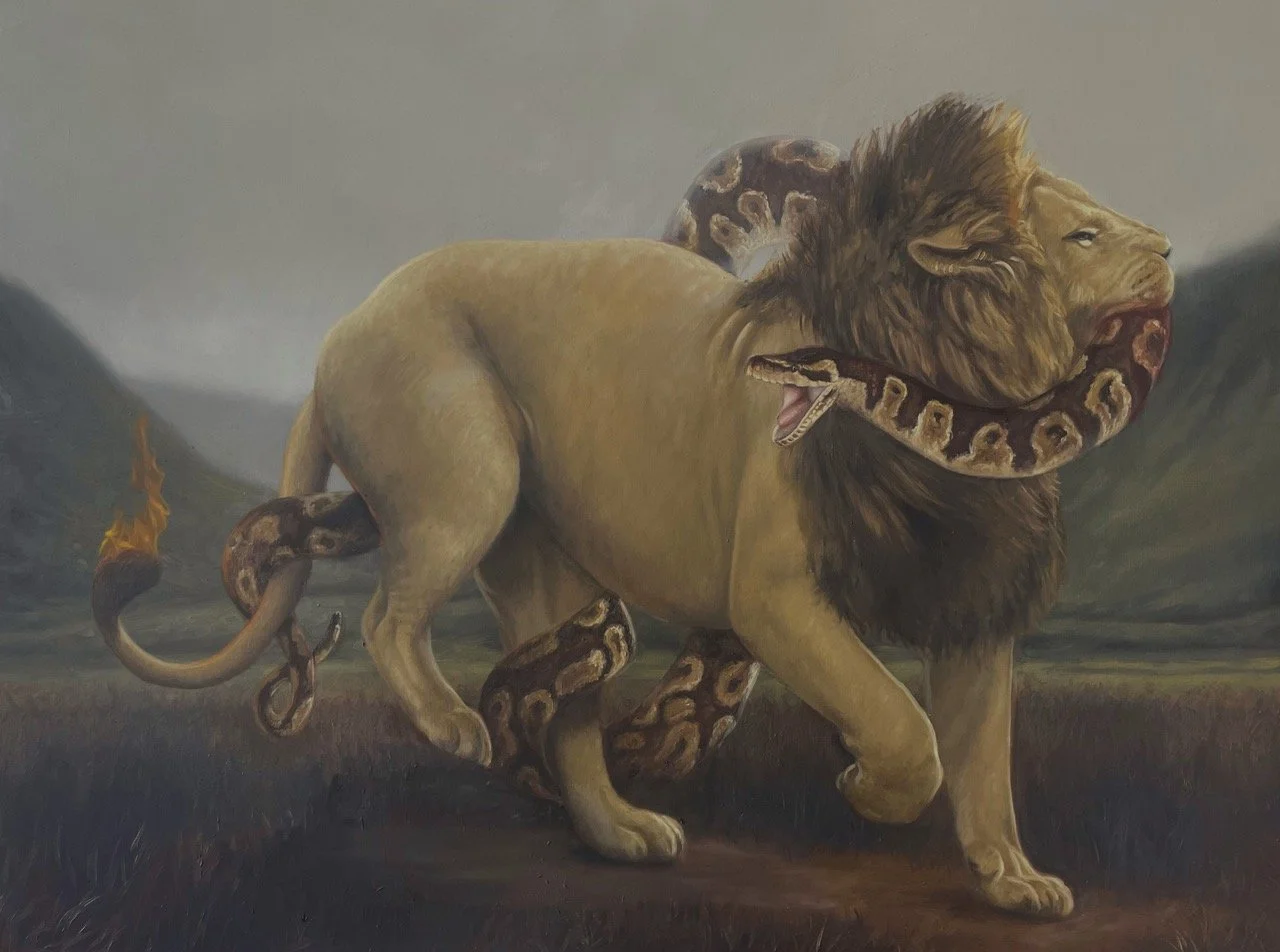
2. Why did you choose “The Lion’s Share” as the signature piece for Fable?

I felt that “The Lion’s Share” most strongly embodied the essence of Fable in a single piece. With this series, I considered suffering in relation to the human condition and encountered the work with a series of questions concerning the nature of our suffering. At the time I made many of these works, I was in a transitory state in life where every step forward came with a punch to the gut. Things started compounding on top of one another, and I fully understood the meaning behind “when it rains it pours”.

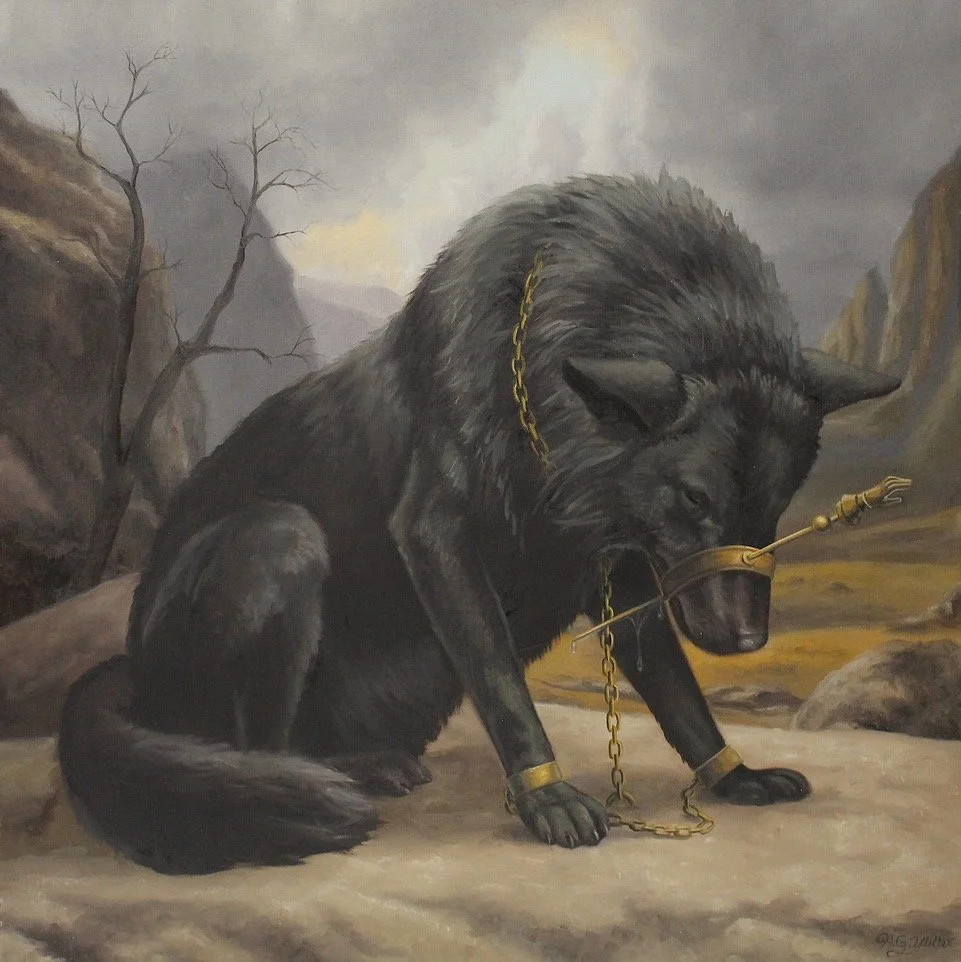
I turned to stories in hopes that they would help my understanding of the human condition and came across the original fable of the lion’s share, a story of wealth accumulation and greed. I took influence from the tale and changed the lion into a figure of compounding misfortune locked in a struggle with its own suffering personified as the snake. This piece speaks to the essence of the collected works. The human condition is suffering and it is our task to parse through, memorialize, and ultimately survive it in whatever way we can.

3. Are there backstories to each of your paintings, and if so does the story or imagery come first?

Both the gift and curse of living with OCD is that I never stop thinking. Painting is almost always at the forefront of my brain. I have considered the conception of ideas in depth lately for a series I am currently working on and arrived at the conclusion that the creation of the work that I make is equal parts relentless thought and chance. Sometimes, at the mercy of whatever void creation emerges from, the ideas just appear as an image. I would say that is the occasion 1% of the time. The rest of the time is a battle. When I approach a painting without the generosity of chance, I usually have to ask myself what it is I want to say. Then comes the planning. Maybe a lion, or Fenrir, or falcon. Each painting is a story of its own and often a meditation on that story. When I am in the studio making the piece, I am focused on that story as the thinking never stops. Painting at least gives translation to the thoughts.

4. What do you hope people will experience when walking through the exhibit?

I genuinely hope those who come to see Fable will recognize their own suffering and feel seen through the work. I think there needs to be a space in which we allow ourselves to recognize our hardship, especially in a word that demands we bear it in silence. It is a noble thing to survive the worst that life has to offer, and Fable asks you to confront your suffering so that you can endure and move forward.

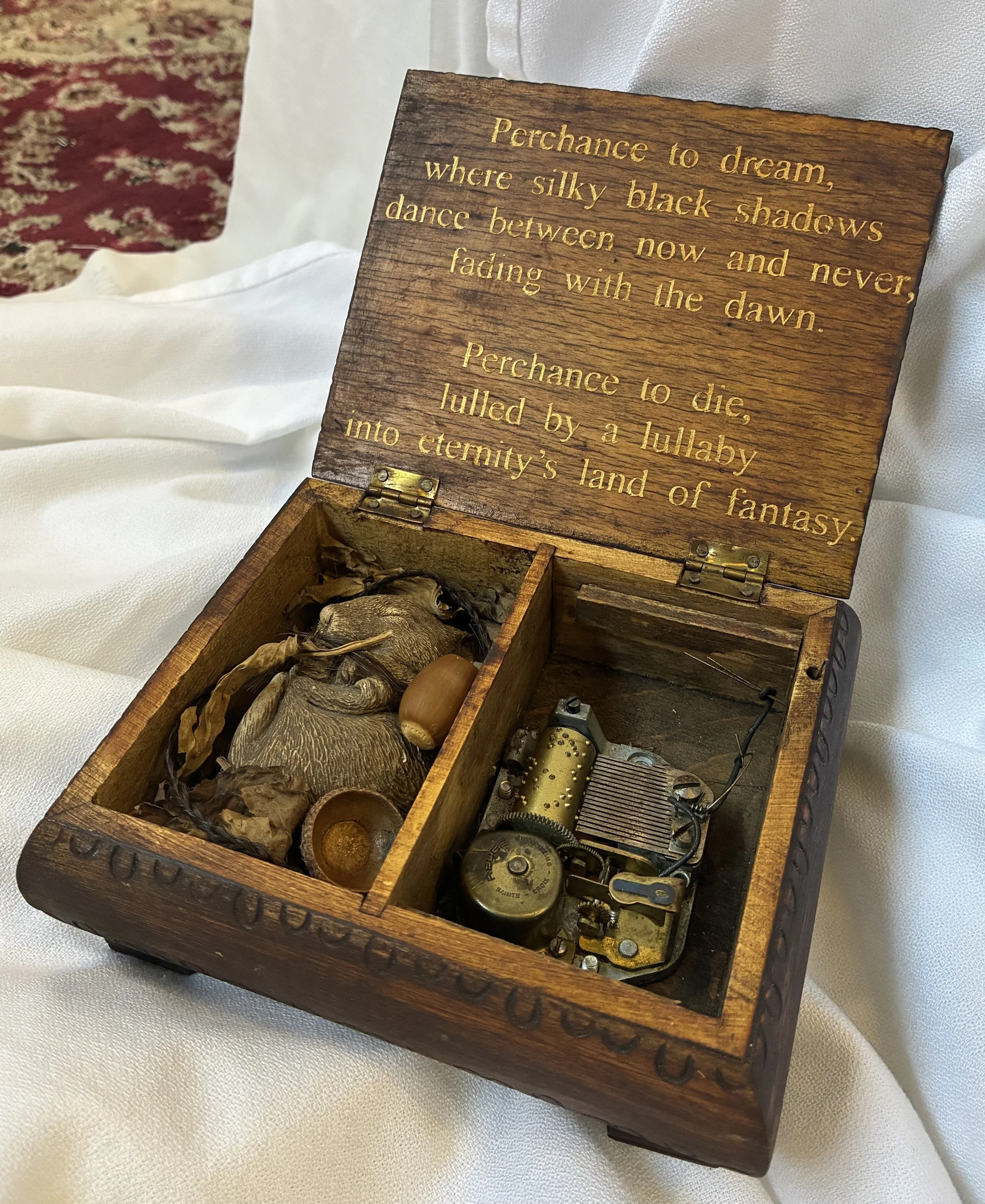
5. What is the story behind the wooden boxes?

I am always trying to push myself and my work to the next level; working with the boxes was an experiment with art and the written word. I find vulnerability in my writing, so, in an honest sense, the boxes were a way that I could showcase my writing and hide it at the same time. Writing is working its way into my practice more and more as time progresses, and it seems like it will feature heavily in a future series. The collection for Fable is a glimpse of what is in production.

I remember making the first box, “Do Not Give Me Hope”, after finding the box itself at a thrift store in Flagstaff. I was staying in Hotel Monte Vista for my birthday and thinking about what a tease hope can be. That is hope for a better future, happiness, etc. I wrote the poem in the hotel room, and the imagery came thereafter. I do believe the vulnerability behind the boxes speaks to how many of us suffer. Sometimes it is in silence, and we must open ourselves up to discover it or let it out. Other times our suffering is something we box away and harbor within.
6. How has your work evolved since your last show at Walter Art “Delusions” in 2023?

Much has changed since 2023, and much will continue to change. I believe through my collaboration with Walter Art, the public gets to watch as I solidify my footing as an artist. Delusions, focused on the work of the subconscious and story. I was just beginning to understand my style and the place that surrealism had in my practice. In everything I do, I always aim to improve.

Over the past few years since "Delusions" in 2023, my concepts and ideas have strengthened, and I feel I have a deeper understanding of myself and my work. Fable takes my fascination with the human condition to a new depth. I believe that the questions are deeper, the work is more cohesive, and my presence is bolder than before. I know my work will only continue to grow and evolve, especially during my graduate studies, and I think it is an honor to be able to share my growing practice.

7. Do you have items in your studio that you use to create an atmosphere when you paint? (If you’re comfortable including a picture of the item(s) that would be great but not required!)

The atmosphere that I work in is crucial for me. Having a “vibe” that correlates well with the work is non-negotiable. I need to feel comfortable and inspired in the place that I work, and my studio always reflects this need. I am inspired by everything antique and vintage. I am of the belief that vintage, handmade furniture will always be better than IKEA. I need things that have soul. Around my studio, I also have little pieces of inspiration from bones and skulls, books, to family portraits. I feel that a proper environment really is a must for artists, especially visual artists. We need things to look at, touch, and respond to.

8. Is there a person, place, or experience that inspires you?

Throughout my life, I have experienced a great deal of grief and loss. For a long time, I thought it best to just move on from the people I have lost so as not to dwell on the past. I am reconsidering my decision about this approach and working through grief with my most recent work. I find inspiration in the people I have lost and their stories. I now feel a need to preserve that memory.

The experience of grief in general also inspires the work I make. I channel that hardship onto canvas as a catharsis. Suffering is the most profound presence in my life, thus the nature of the work. I understand that the imagery I make is challenging for some who have never felt the depths of emotional trauma. I am often asked why I don’t paint things that are happy, and the answer is I would if one day the happiness outweighed the turmoil.

My most prominent inspiration for Fable was the natural world. Animals have a way of suffering in silence that I resonate with. Most people feel like the answer to enduring pain is to endure it in silence. We become animalistic in that sense as we put on a brave face to distract from any perceived weakness. I believe this is one of the reasons why animals are featured in folklore and legend so prevalently. The message is usually a description of the many ways we as humans can expect to suffer. These stories teach us how to do so in silence. At least for me, staying quiet never works. Fable asks you to confront your own pain and find a better way through it.
See Fable by Heather Weller in person! This is showing at Walter Art Gallery from September 18–October 16, 2026. Join us during our Third Friday events or email gallery@thewalterhive.org to schedule a viewing.
An Interview with Laura Spalding Best


Hailing from the Midwest, Laura moved to Arizona when she was 18 and completed her BFA at Arizona State University. She has exhibited work at numerous solo and group exhibitions in downtown Phoenix and completed several public murals across the Valley of the Sun. Best works mainly on found domestic objects such as silver platters, teacups, muffin trays, and old metal irons. In an interview with the Phoenix Art Museum, Best said, “I love reusing objects and giving them a new purpose and life. Found objects come to me with more history than a blank canvas.” Using these objects as the foundation for her work, the artist explores the complex and challenging relationship between the desert environment of the southwest, human impact on the landscape, and the emotions associated with addressing climate change.

Is there a specific person or school that influenced you to be an artist?

I knew I wanted to be an artist from about age ten. I discovered that I could draw well and started drawing from still lifes around the house. I filled up sketchbooks and drew portraits of friends and family. My mom has always been creative and leaned towards the arts, she recognized and encouraged my practice from an early age. I loved doing it and knew I wanted to be an artist when I grew up.

What was the inspiration for this piece?

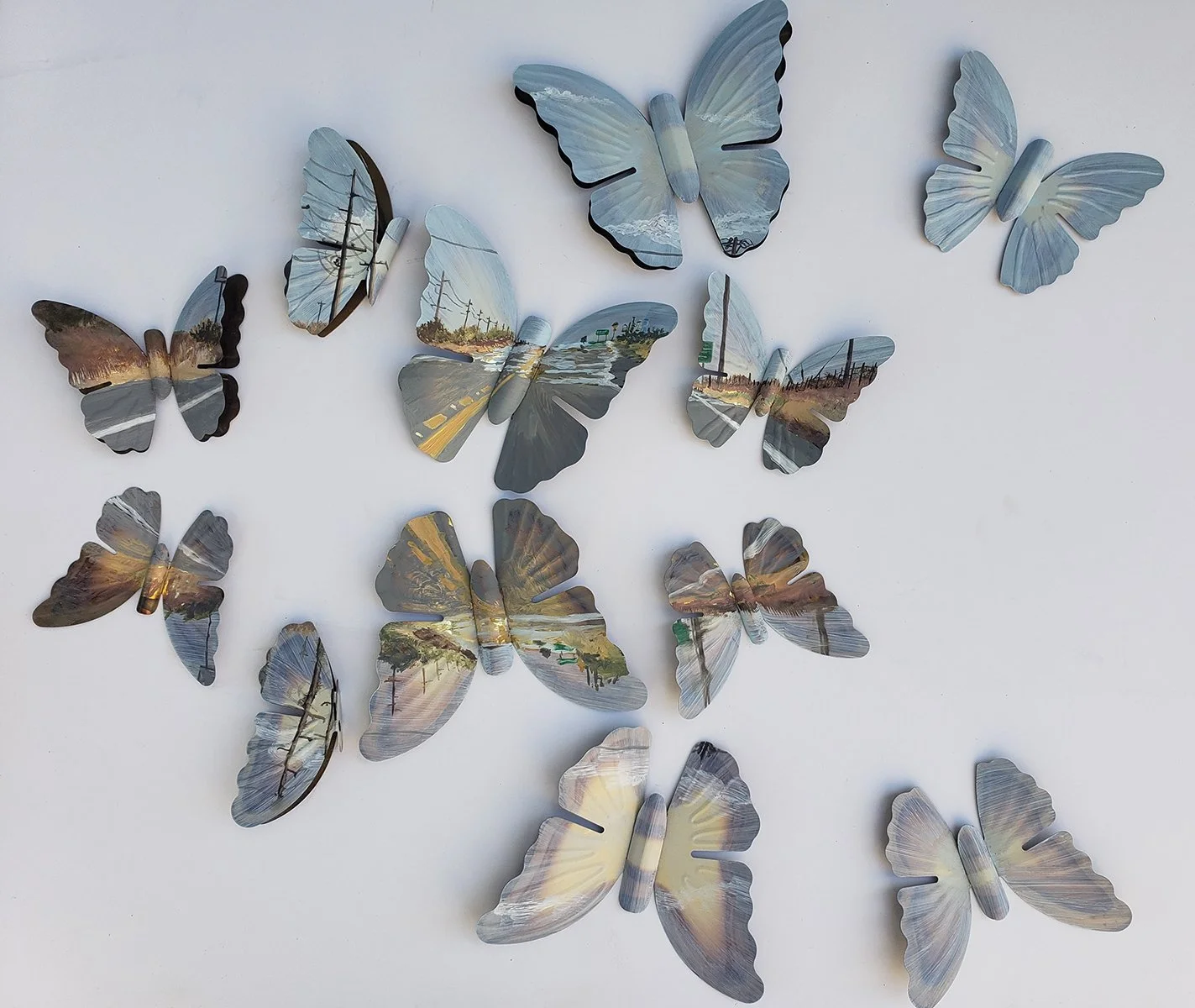
This piece, “Trickle Down Ecologics”, represents a really important transition in my work. I have been working with oil paint on found objects for a long time, but this was the first time I went with the flow of the mirage in the desert landscape and broke out of the painting plane onto a separate object. It may seem like a small thing but it was a paradigm shift to my way of approaching my paintings. The inspiration came from the mirage, I had been playing with the idea of the inferior mirage for awhile, this is specifically the mirage we can see practically every day of the year on the paved roads in the Valley. It is an optical phenomenon, meaning you can see it and photograph it, but nobody else can see the mirage you see. It often appears to be water on the horizon, like a tantalizing promise of resources that you can run toward forever but never reach. That concept really resonates with me and I use it as a metaphor for climate change and looking at how resources are utilized in the Sonoran desert and southwest. In this image the melting point starts with the mirage at the horizon of the highway and the landscape then appears to turn liquid and melt from there until the imagery starts to lose detail and is reduced back to its original state of paint.

What drew you to the urban landscapes that you often use in your paintings?

I really started critically looking at the urban landscape about 18 years ago. I'd been out painting the natural landscape far away from the realities of the urban environment. When I came home I found myself analyzing the supposedly unsightly landmarks of a city landscape, like telephone poles and powerlines that project into our picturesque Southwest sunsets. I found that I would rather approach them unflinchingly and accept them into my everyday view of the landscape. Since then the urban landscape has provided endless challenges in my work, it has made me evaluate resources and what is valued most in a landscape.

How have your experiences as Exhibitions Manager at SMoCA affected your artwork?

I've been working in a museum for almost 15 years, and it's fair to say that my perception of space was altered since day one. As soon as I started to install other people's artwork I started to look at my own differently. I began to see my paintings less as individual objects and more as parts of larger installations. Now when I approach making new work for an exhibition I think beyond the process and subject matter and make it for its intended space. It's a good practice to think of the life of an artwork beyond the studio.

Have you noticed any changes in the local arts scene recently?

I've been connected to the local arts scene for almost 20 years now, it's always shifting and changing. I've been part of studio spaces and galleries that were artist-run, and seen the boom that followed a lot of individuals' efforts and commitments. The beautiful, painful irony of developers seeing the value of an arts district and the downturns that permanently closed spaces. There have been a lot of special spaces that are no longer around but are no less important. Each gallery or pop up may have had a fleeting time in the sun but those little creative factories still leave ripples in the local art scene. I think the local art scene always stands on the shoulders of artists, their passion, commitment and selflessness. For me it has become less about the arts district and more about experimental spaces. These can be anywhere, any gallery or pop up or outdoor venue can be the perfect setting for new work, I'm a firm believer in putting in what you want to get out of an exhibition, and sometimes the best people to manage these opportunities are artists themselves.

How does planning murals differ from planning smaller scale works? In what ways is the process similar?

I absolutely love switching between teeny tiny paintings to larger than life murals. It's funny, but the process feels very similar to me. The way I approach a detailed oil painting is similar to the way I execute a large mural. The relationship and proportion of brushstrokes and paint makes a lot of sense to me. I think it is a good exercise to shift scale in that way. When I'm stuck on a project in the studio the best way to get out of my head is to step out of my comfort zone into a mural that forces me to use my whole body to paint and recalibrate my way of thinking. I've come to consider murals as an important part of my practice, they invariably change the course of my work and signal a new direction that I will chase until the next one appears.

Learn About Artist Art Levy

Art Levy found a passion for art early on, majoring in art and painting as an undergraduate. He then went to medical school and spent the next 25 years as a cardiovascular surgeon. After retiring, Dr. Levy returned to art. He discovered and fell in love with the encaustic processes and has spent the last 18 years developing his voice and style. Throughout his career as an artist, Dr. Levy has continued to be fascinated by science – biology, physics, physiology – and he has created series on topics such as cell physiology and the Big Bang theory. His artwork has also explored the origins of language and the passage of time.

Is there a specific person or school that influenced you to be an artist?

My strongest and earliest influence was my high school art teacher. She encouraged me to explore possibilities, she was my mentor and confidant as well. I had never had any formal instruction until her classroom. She helped me to realize how much the art world meant to me and helped guide me down the pathway to creativity.

"Fury"

What was the inspiration for this piece?

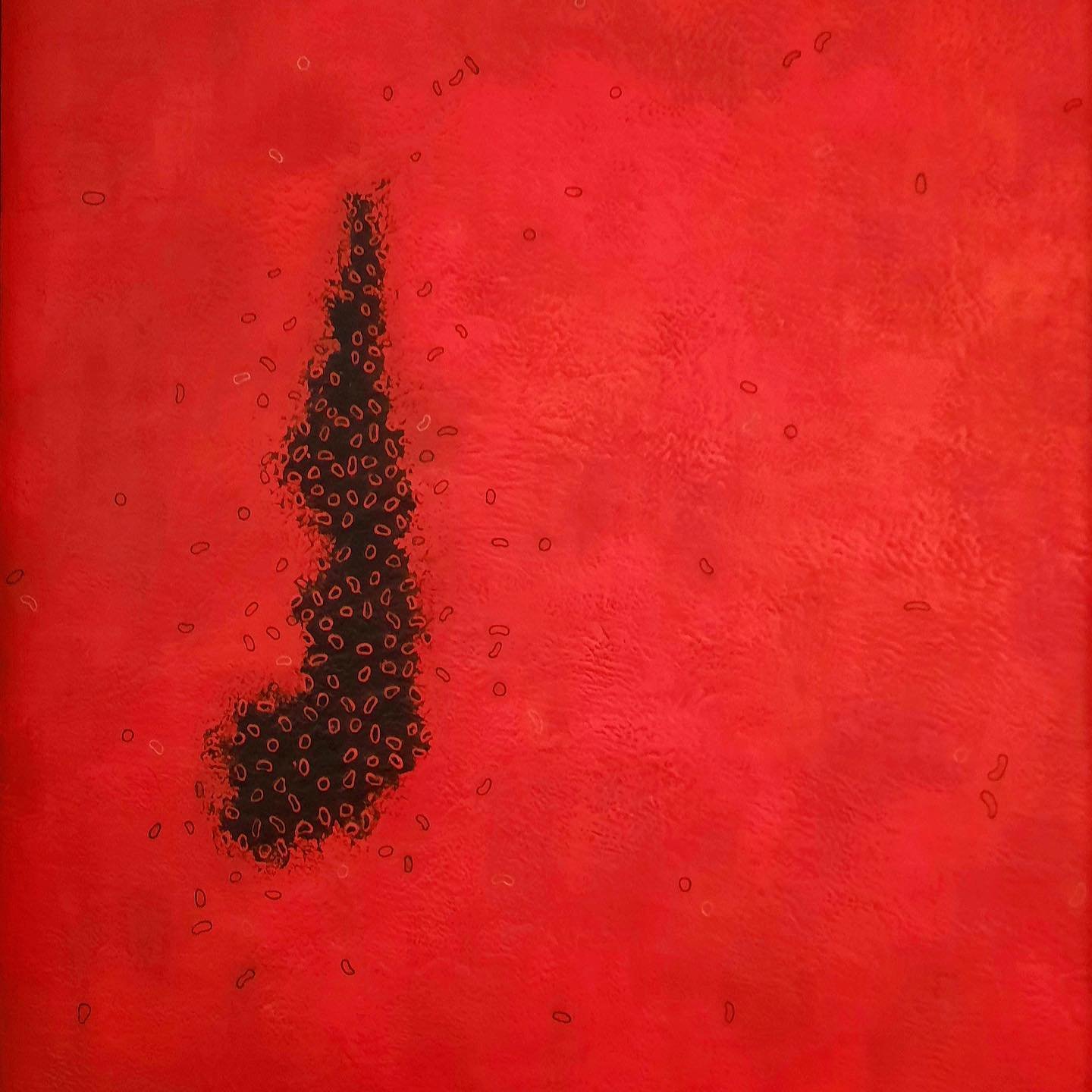
I became obsessed with the big bang theory, the fact that the universe was constantly expanding. The result...the cosmic perspective series of work. The image attached is, "Fury " one of my favorites.

What drew you to encaustics?

The ancient nature of the process drew me in. The flexibility, the smell of the wax, the intense color and the surprising images that seemed to evolve. It was love at first sight.

Tell us a little bit about your Lifeforms series.

This series was a function of both my medical career and my long term interest in cellular forms. I took several courses in histology and was amazed by the beauty of the stained images under the microscope. Seemed like a natural transition to the art world.

Have you noticed any changes in the local arts scene recently?

Yes, I am much more isolated . Gallery openings absent. The comradeship that I enjoyed with the art community diminished. I have become more introspective.

How has your time as a cardiovascular surgeon affected your work as an artist?

Cardiovascular surgery was intense frequently dealing with life and death situations. Perhaps I appreciate the beauty of my surroundings a bit more. My paintings are an attempt to evoke emotion, the affirmative nature of life's possibilities. I just have learned how fragile and unpredictable our life is.


Spotlight on Local Artist, Gloria Langer!

Local artist Gloria Langer was born in Lisbon, Portugal in 1965, and studied Graphic Design working in this industry for nearly 20 years. Through living and traveling in various countries, she experienced and enjoyed different cultures. Since she moved to the U.S. in 2012, she has translated the themes and concerns of current life into artistic expression. She had her first solo exhibit in 2016, at the Burton Barr Library with “Facts of Life”, and a second show, “Vainglory” at the Walter Gallery in 2018. Her work has been represented in the American Art Collector, The Vortex Magazine, and Articulate.


122281605_4637586132978207_4755478379822118327_o.jpg

What is a type of material you like to use in your mixed media pieces and why do you like working with it?

"In my mixed media pieces I use many cutouts from magazines and recycled materials. I love to use corrugated cardboard from secondary packaging that supply interesting structures that I use as the bases for my collages for an extra level of complexity."


Do you find yourself using any recurring aspects in your work?

“I recur thematically to different aspects of the same ideas. I’m mostly interested in currently relevant themes like environment, equality, and other social issues. I find myself repeatedly using certain visual elements that create a symbolic language recognizable throughout my work. It is an evolving process.”

122616727_4652360978167389_8292053505478027034_n.jpg
 
123004130_4668419423228211_1023708166578047601_n.jpg

Is there a subject or a place that you find particularly inspiring?

“Urban spaces and their inhabitants are always a great source of inspiration for me. I love big cities and their diversity, complexity, and dynamics that supply infinite themes, ideas, and stories that are just waiting to be told.”


Have you noticed any changes in the local arts scene recently?

“Locally, it is hard to miss the proliferation of murals everywhere in the city. Thankfully, these are also becoming thematically more relevant. They are an important channel for art and pop culture in Phoenix and a way to bring art to a broader public. It would be wonderful to see other types of artistic expression expand in the same way.”

 
124267469_4726362380767248_419830719459144352_n.jpg
 
125359561_4745382405531912_962725356671265360_n.jpg
 

What was the inspiration for this piece?

“Still Life” is about the many challenges of modern times. Real struggles and the intrusiveness of over-information are overbearing and oppressive. This piece is about redemption and our capacity for evasion from a confining and chaotic space where normality becomes impossible. Liberation and a return to oneself are still achievable.”


If you are interested in more details or purchasing any of Gloria Langer’s work, please send us an email at gallery@thewalterhive.org!

Get to know Abbey Messmer!

Abbey Messmer was born in Dallas, Texas and currently lives and works in Phoenix, Arizona as a fine artist and programming director at local non-profit Scottsdale Center for the Performing Arts. Focused primarily in painting, Messmer uses water as a tool to explore varying perspectives and contemplate the nature of reality. Her work aims to echo the inevitable state of flux, corruption, and re-composition we as modern humans endure on the daily.


“Bend Don’t Break Baby”, Gouache and acrylic on paper, 42 x 42

“Bend Don’t Break Baby”, Gouache and acrylic on paper, 42 x 42

Is there a particular person or school that influenced you to be an artist?

“My high school I.B. art teacher encouraged me to pursue fine arts in college and I actually attended her alma mater.”


What is your favorite medium to use and why?

“I’ve enjoyed using gouache and acrylic the last few years but I really love oils.”

 
“The Question Will Determine the Answer” Gouache and acrylic on canvas 48 x 64

“The Question Will Determine the Answer” Gouache and acrylic on canvas
48 x 64

118014276_4351340064936150_441808868015518589_n.jpg

What is an important memory from your life as an artist?

“One of my most ambitious and memorable projects was my last show at ‘Eyelounge’ where I transformed the gallery into a swimming pool and with the support of artist Mark Hughes, projection-mapped my water film onto the interior surface of the pool.”


What was the inspiration for this piece?

“‘Slowing Down to Speed Up’ was inspired by a book called ‘Island’ by Aldous Huxley”

“Slowing Down to Speed Up”, gouache and acrylic on panel, 24 x 18

“Slowing Down to Speed Up”, gouache and acrylic on panel, 24 x 18


If you are interested in more details or purchasing any of Abbey Messmer work, please send us an email at gallery@thewalterhive.org!

Say Hello to Amanda Adkins!

Amanda Adkins is a native of Arizona who graduated from Arizona State University with a Bachelor of Fine Arts Degree in Art Education and specialization in painting. Adkins’ love for animal folklore and the desert is reflected in her works and has kept her in Arizona where she has created many murals and taught a community mural making courses at ASU. She’s also participated in regional, national, solo, and group exhibitions. One of her most recent projects has been turning her studio space in Bragg’s Pie Factory into a gallery called ‘Cobra Flute Projects’ to co-curate with her studio mate. We asked Amanda more about her art, here’s what she said:


109365694_4152007978202694_8465848646409678741_n.jpg
 

What is your favorite medium to use?

“I have 2 favorite mediums and they are oil paints and watercolor. I love being able to easily blend and move color and have a wet surface to go back into and manipulate. Both are similar in different ways. With watercolor there are so many different things you can use such as, salt, tea, Kool-aid and rubbing alcohol. When you alter an image it becomes more like an experiment of what's going to happen and how I can use different elements with the water.”


What’s a favorite memory from your life being an artist?

“My favorite memory and important moment was when I was featured on NPR’s morning edition storytelling series through KJZZ. I did a storytelling event at Phoenix Art Museum in 2013 and told a story about a mural I painted for the Helen K. Mason Performing Arts Center. I had no idea that they would feature me and the morning they did, I was on my way to work and my phone just started blowing up with friends and family saying they had just heard me on the radio! It made my day and I was able to hear it when they posted it to their website.”

“Providence”, Oil on Birch, 36x36

“Providence”, Oil on Birch, 36x36

 
“Ten Years Gone”, Watercolor and Gouache on Cold Press Paper, 24x30

“Ten Years Gone”, Watercolor and Gouache on Cold Press Paper, 24x30


What was the inspiration for your painting “10 Years Gone?”

“Led Zeppelin inspired my piece ​10 Years Gone​. Titled after the song, I felt this deep connection with the love he had for someone but the love I miss is my health and healthy body. Being able to be active and and feel free from the burden of health issues and the time that I feel it has robbed me.”


Is there a particular person or school that influenced you to be an artist?

“Growing up my older sister was taking art classes and would make art at home with my mother. I saw both of them creating which then in turn began my journey into creating art as well.”

“Take a Wish, Leave a Wish”, Oil on Birch, 20x20

“Take a Wish, Leave a Wish”, Oil on Birch, 20x20

 
“Seedling 2”, Oil on Birch, 24x24

“Seedling 2”, Oil on Birch, 24x24


Is there a certain color palette you find yourself leaning towards most?

“When I look back at my work I see that most of the series I've done I will find a color pallet and stick to it for a while until I feel it leave my system. Right now Ive been using turquoise and yellows and a lot of flesh tones in my work. I'm sure it will change again once I move on from painting this series.”


If you are interested in more details or purchasing any of Amanda Adkins work, please send us an email at gallery@thewalterhive.org!